

By: Muhammad Shafique Baloch, Advocate High Court
Introduction
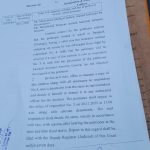
In a groundbreaking and progressive judgment, the Lahore High Court has clarified that a proclaimed offender cannot be barred from testifying in an unrelated criminal trial. The case—Crl. Misc. No. 46048/M/2024 (Nosheen Ali Nasir v. ASJ Daska & Others)—addresses the competency of witnesses, video link testimony, and the scope of disqualification under the Qanun-e-Shahadat Order, 1984 (QSO).
As a practicing criminal lawyer in Lahore, I find this judgment to be a significant development for litigants involved in cross-FIRs, overseas witnesses, and those facing procedural obstacles due to proclaimed offender status.
Case Background
The petitioner, Mst. Nosheen Ali Nasir, moved the court seeking permission for her brother, Husnain Ali Nasir (an injured witness in FIR No. 722/2022), to record his statement via video link. The trial and revisional courts denied the request, citing his proclaimed offender status in two other FIRs involving the same rival party.
However, the Lahore High Court reversed the decisions, affirming that:
Article 3 of QSO does not disqualify proclaimed offenders from testifying.
Video link evidence is both legal and procedurally fair, especially with medical justification.
Courts cannot create extra-statutory barriers to exclude witnesses who are otherwise legally competent.
Key Judicial Observations
The judgment, authored by Hon’ble Justice Tariq Saleem Sheikh, makes several vital observations:
Competency to testify is a matter of legal qualification, not credibility.
A person’s status as a proclaimed offender in one case does not impact their right to testify in a different legal matter.
Technological tools, such as video conferencing, are fully recognized under:
Article 164, QSO
Prevention of Electronic Crimes Act (PECA) 2016
Punjab Witness Protection Act 2018
Courts in Pakistan, India, UK, and USA support the use of remote testimony, especially in cases where personal appearance is impractical.
Legal Significance of the Judgment
This precedent is vital for the future of fair trials and due process:
✅ Enables overseas or medically unfit witnesses to participate via video link.
✅ Restricts courts from applying blanket disqualifications based on unrelated proclaimed offender statuses.
✅ Reinforces that legal capacity, not personal character, determines a witness’s right to testify.
✅ Reasserts the judiciary’s obligation to follow statutory law rather than subjective morality or custom.
Conclusion: A Step Toward Justice
As a lawyer deeply involved in criminal defense, bail applications, revisions, and constitutional petitions, I view this ruling as a significant stride toward justice accessibility and rule-based adjudication.
This decision prevents the misuse of proclaimed offender labels and protects the rights of those wrongfully barred from giving evidence. It’s a reminder that even accused individuals deserve their voices heard—especially in cases where truth and justice hinge on their testimony.
Need Expert Legal Help?
If you’re dealing with challenges related to:
Proclaimed Offender Status
Cross-FIR Litigation
Remote Testimony Requests
Bail Matters or Criminal Appeals
Asylum or Human Rights Cases
I’m here to represent you with professionalism and confidence.
📞 Call/WhatsApp: 0321-4960782
📍 Office: Chamber No. 7, 1st Floor, Aiwan-e-Adl, Lahore
🌐 Website: www.bestlawyerlahore.com
📧 Email: bestlawyerlahore@gmail.com