



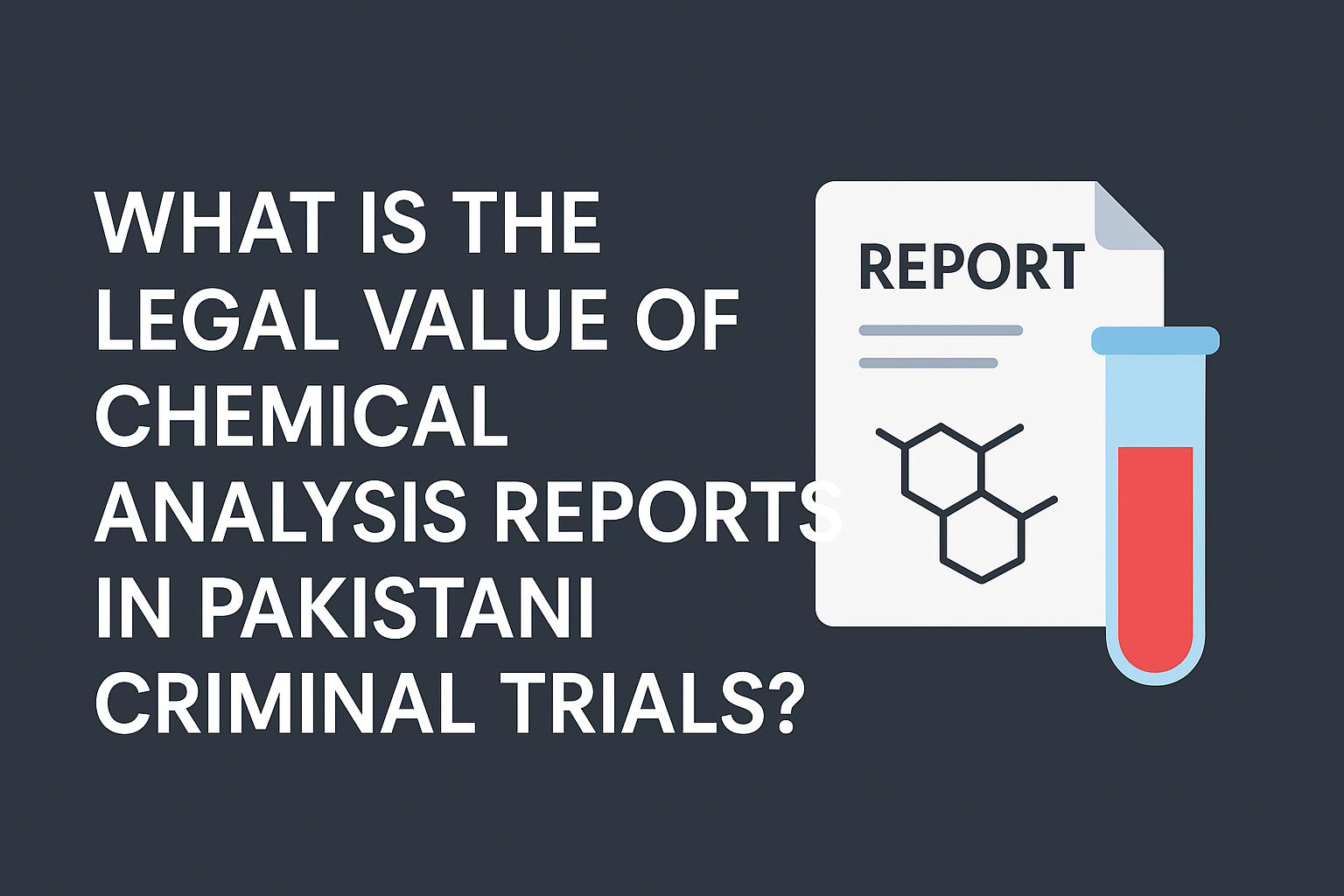
Understanding how chemical examination reports are treated in criminal trials is crucial for both legal practitioners and the general public. A recent judgment by the Lahore High Court has clarified the evidentiary value of forensic reports, especially when the chain of custody, scientific methodology, and identification protocols are questionable.This blog explains the ruling in plain language, highlights its significance for criminal justice, and provides key lessons for lawyers, investigators, law students, and citizens who seek justice under the rule of law.—
🔍 Why This Judgment Matters.
Forensic evidence is often seen as conclusive in criminal cases, particularly in narcotics, poisoning, homicide, and explosive-related offences. However, the Court has now reinforced a critical principle:> A chemical analysis report is not automatically conclusive evidence unless the prosecution proves a complete and unbroken chain of custody and establishes scientific credibility.This judgment serves as a legal checkpoint to safeguard the rights of accused persons and uphold due process under Article 10-A of the Constitution (right to fair trial).—
📌 Background of the Case.
the prosecution relied heavily on a chemical analysis report to establish that the seized substance was illegal or prohibited.The defense objected, arguing that the report was defective and lacked:
Proper chain of custody
Clear identification and labeling of samples
Description of analytical methods used
Chemical formula or standard nomenclature
The Lahore High Court examined whether such a report could legally sustain conviction.
—⚖️ Key Legal Findings
✅ 1. Laboratory Reports Are Not Absolute Proof . Expert opinions, including chemical examiner reports, fall under Article 59 of Qanun-e-Shahadat Order. They assist the court but do not bind it unless corroborated by reliable supporting evidence.
✅ 2. Chain of Custody Must Be Unbroken
The prosecution must prove: Who collected the sample?How it was sealed?Who transported it?How and when it reached the laboratory?Any gap renders the evidence doubtful.
✅ 3. Report Must Include Scientific Detail. A valid forensic report must clearly mention:Standard chemical name or formulaTesting methodology Laboratory accreditationExpert’s credentials and signature
✅ 4. Benefit of Doubt Goes to the Accused. If the report is incomplete or chain of custody is compromised, the accused is entitled to acquittal.
—👨⚖️ Impact on Criminal Cases
This judgment reshapes how courts will now assess forensic reports.Aspect Old Practice New Legal Standard After Judgment.
-🎯 Practical Guide for Lawyer.
for Prosecution Ensure sample seals are documented from recovery to dispatch.Produce all officials involved in handling.Get detailed, scientifically-backed reports from certified labs.
For Defence ,challenge every missing link in chain of custody.Highlight vague or incomplete laboratory results.Argue violation of Article 10-A (Fair Trial).-
–📢 Significance for the General Public. This ruling ensures that:
No one can be convicted solely on weak or incomplete forensic reports.
Scientific evidence must meet international standards of authenticity.
Citizens’ constitutional rights are protected against arbitrary convictions.–
-🔑 Key Takeaways.
Forensic reports are not final verdicts.
Chain of custody is crucial.
Courts will not rely on chemical analysis unless backed by credible evidence.
This judgment strengthens the integrity of Pakistan’s criminal justice system.-
–📚 Frequently Asked Questions
(FAQ)
Q: Can someone be convicted solely on the basis of a chemical report?
A: No. The report must be supported by credible recovery evidence and witness testimony.
Q: What happens if the sample was not sealed properly?
A: The benefit of doubt will go to the accused, leading to acquittal.
Q: Does this judgment apply to narcotics and drug cases?
A: Yes. It directly affects all cases where forensic chemical testing is relied upon.—
📞 Need Legal Assistance?If you or someone you know is facing a criminal trial based on forensic or chemical evidence, expert legal representation is essential.Contact Advocate Muhammad Shafique Baloch, Lahore High Court Specialist in Criminal & Constitutional Law.📱 Phone: 0321-4960782🌐 Website: www.bestlawyerlahore.com✉️eMail lawyerbaloch@gmail.com
Protect your legal rights with expert advice based on the latest judicial precedents.—