




by Muhammad Shafique Baloch Advocate High Court, Lahore.
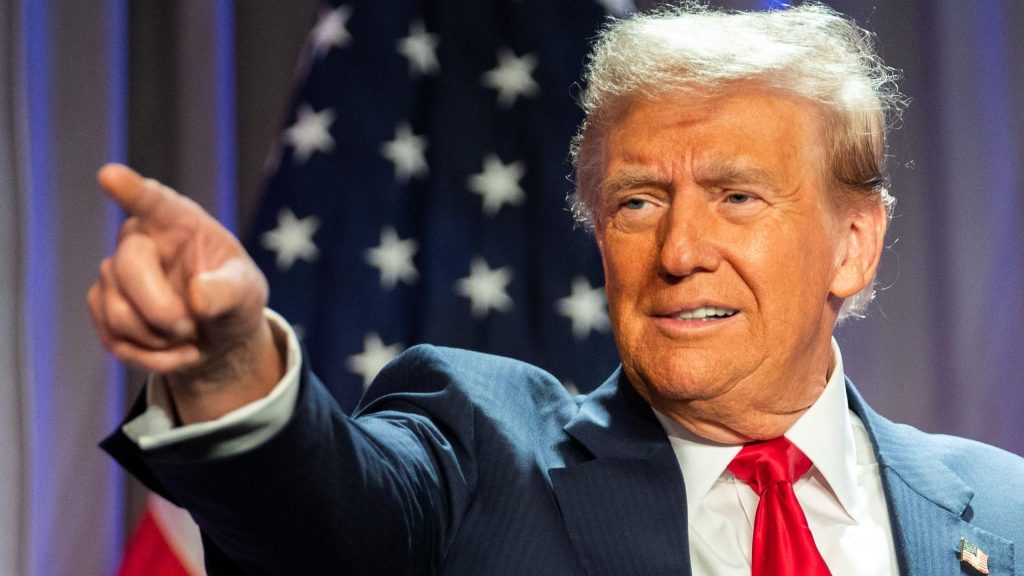
Donald Trump’s remarks about Canada potentially becoming the 51st state of the United States have sparked debate and intrigue across North America. While many interpret his statements as either humor or a rhetorical jab, the suggestion raises significant legal, political, and cultural questions. Here, we explore whether this scenario holds any practical merit by analyzing both countries’ legal frameworks and international laws.—
A Closer Look at Trump’s Remarks
1. Context of the Comment
Trump’s remarks reportedly came during a dinner at Mar-a-Lago, where he suggested that if Canadian tariffs led to economic distress, Canada could consider becoming a U.S. state. Officials like Canadian Public Safety Minister Dominic LeBlanc dismissed the statement as light-hearted banter rather than a genuine policy suggestion.
2. Strategic Interpretation
Some view Trump’s comments as a reflection of his negotiation tactics or frustration with Canada’s trade policies. By framing Canadian Prime Minister Justin Trudeau as a “governor” and referring to U.S. protection of Canada, Trump appeared to highlight perceived economic dependencies rather than float a serious proposal for annexation.
Legal Barriers to Canada Becoming the 51st State
1. U.S. Legal Framework The U.S. Constitution, particularly Article IV, Section 3, outlines the process for admitting new states:- Congress must pass enabling legislation.- Both the applicant territory (or nation) and Congress must approve statehood.The process is highly detailed and assumes the voluntary application of a region to join the United States, often requiring negotiation and consensus within both parties. Annexing an entire sovereign country like Canada would demand significant constitutional amendments and likely provoke debate about violating international norms on sovereignty.
2. Canadian Legal Framework Canada’s Constitution Act of 1867 and its modern iterations clearly define the country’s federal structure, provincial authority, and sovereignty:- Amending the Constitution requires agreement by the federal government and at least seven provinces representing 50% of the population (the “7/50 rule”). – The prospect of dismantling Canada as a sovereign nation would almost certainly fail to gain the necessary political and public support, given its implications for national identity and governance.Additionally, the Canada Act of 1982, passed by both the British and Canadian Parliaments, further reinforces Canada’s sovereignty, making the idea of ceding statehood to a foreign power legally implausible.—
International Legal Considerations.
1. Respect for Sovereignty. Under international law, Canada is a sovereign nation. Article 2(4) of the United Nations Charter prohibits the use of force or coercion to compromise the territorial integrity or political independence of a state.
2. Territorial Changes Through Consent. Annexation or territorial changes require mutual consent between nations, as outlined in customary international law and practices. For example:-
Vienna Convention on the Law of Treaties: Any treaty or agreement enabling such a union would require ratification by Canada, the United States, and potentially other international bodies. –
Non-Interference Doctrine: This principle, embraced by both countries, opposes external interference in domestic affairs.The sheer procedural and political complexities make it unlikely that either country would pursue such a scenario through legitimate channels.—
Economic and Political Realities. Even without political union, Canada and the U.S. maintain strong economic and cultural ties. The USMCA (United States-Mexico-Canada Agreement) exemplifies the close trade relationship, and economic integration between the two countries is robust. However, political union raises significant challenges:
1. Cultural and Identity Differences. Canadians generally value their unique identity, rooted in bilingualism, universal healthcare, and parliamentary democracy—values distinct from those in the United States.
2. Public Sentiment
Canadian public opinion overwhelmingly opposes any move toward U.S. statehood. Sovereignty and independence are cornerstones of Canadian national pride.
3. U.S. Policy Trump’s “America First” policies and rhetoric often alienated Canada, suggesting that U.S. political leaders may lack the long-term strategy or interest to incorporate Canada as a state.—
Conclusion: An Unlikely Scenario. While Trump’s comments about Canada joining the United States as the 51st state have drawn attention, they are far more rhetorical than practical. The legal barriers outlined in both U.S. and Canadian law, alongside international legal principles, make such a move implausible. Moreover, the cultural, economic, and political dynamics between the two countries indicate that even if such an offer were made, it would face overwhelming resistance from Canadians. In essence, Trump’s remarks are best viewed as part of his well-documented penchant for hyperbole and strategic rhetoric rather than a serious or feasible proposal. The strong and independent ties between the two nations are better served through continued cooperation and mutual respect than through ideas of political union.