

by Muhammad shafique Baloch Advocate High Court
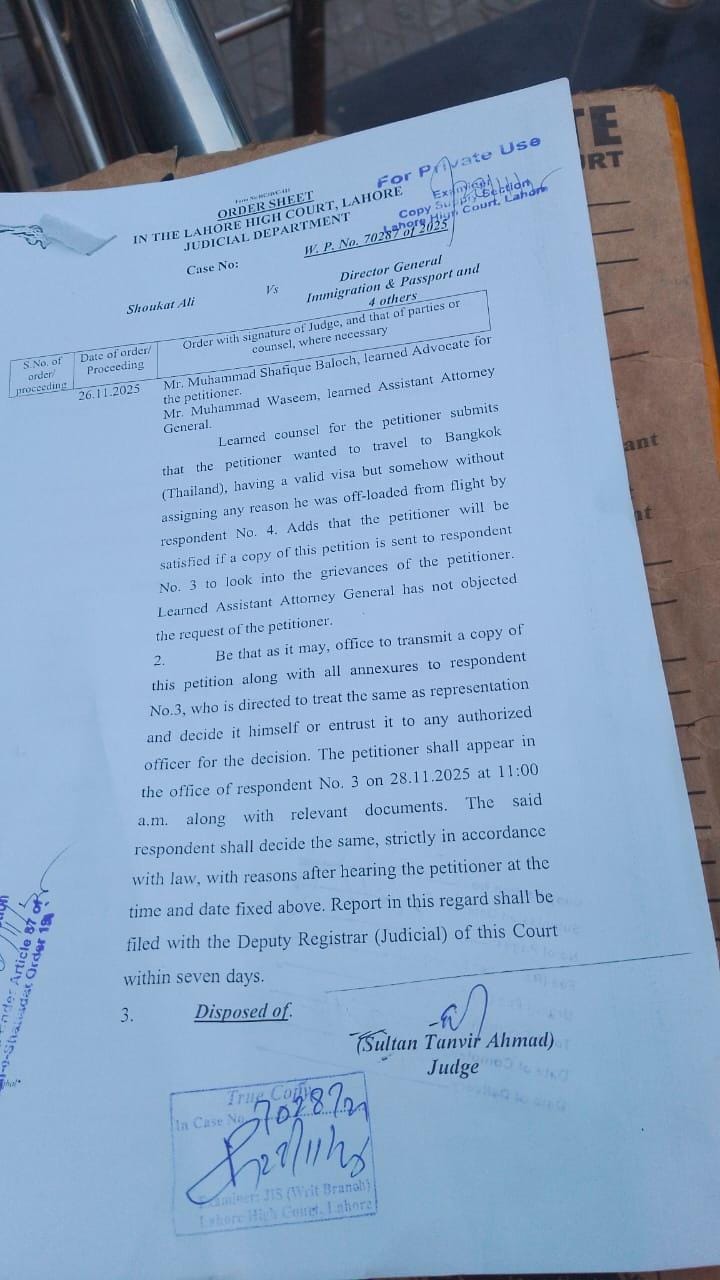
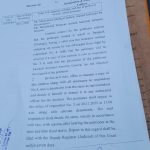
A recent decision from a newly appointed judge of the Lahore High Court has raised serious concerns about the independence of the judiciary and its role in upholding the Constitution. In a writ petition concerning the unlawful detention of an individual, Usman Mahmood, the court dismissed the petition on jurisdictional grounds, citing that the detainee’s custody fell under the purview of an army official. While on the surface, the ruling appears procedural, it reveals deeper issues that merit careful consideration.
A Risky Interpretation of Jurisdiction
The decision dismisses the petition filed under Article 199 of the Constitution, which enables the High Court to intervene in matters of unlawful detention. The court’s reasoning, stating that it lacked jurisdiction because the detainee was allegedly held by an army official, raises concerns about the proper scope of judicial oversight. While military personnel are often subject to military law, the judiciary is not absolved of its responsibility to protect fundamental rights, particularly when an individual’s liberty is at stake.By effectively allowing an external force to operate above judicial scrutiny, the order challenges the very principle of equality before the law. The judiciary’s independence should ensure that no entity, including the military, is beyond the reach of legal accountability. Allowing such an interpretation risks undermining the role of the courts as a check on the power of the executive and military.
International and Local Precedents
The importance of judicial independence cannot be overstated, as it serves as a safeguard against any encroachment on individual rights. Internationally, courts around the world, including the United States and India, have consistently upheld the principle that no one is above the law. In India, the judiciary’s intervention in matters involving unlawful detention, regardless of military involvement, has been crucial in preserving human rights.Locally, Pakistan’s judiciary has historically played a pivotal role in asserting constitutional protections, even in the face of military influence. Landmark decisions, such as the *Aitzaz Ahsan v. Federation* case, demonstrated the court’s willingness to stand firm against executive overreach. In this context, the recent decision from the Lahore High Court seems contrary to these well-established principles.
Judicial Duty to Protect Rights
The core responsibility of the judiciary is to protect the fundamental rights of individuals. In cases of unlawful detention, the court must act swiftly and decisively to safeguard the liberty of citizens, regardless of the person or institution responsible for the detention. The dismissal of the petition on jurisdictional grounds in this instance signals a concerning reluctance to assert judicial authority when it is most needed.While respecting the court’s authority, it is important to recognize that the judiciary’s role as an independent institution should not be compromised. In this case, by deferring to military authority, the court inadvertently sends a message that certain individuals are beyond legal accountability.
A Call for Vigilance
This ruling should serve as a reminder of the constant need to protect the independence of the judiciary. Legal professionals, citizens, and advocates must remain vigilant to ensure that judicial oversight is never diluted or compromised. The rule of law is the foundation of any democratic society, and it is the responsibility of all to ensure that this principle remains intact.If you require expert legal guidance or assistance with matters concerning constitutional rights, unlawful detention, or any other legal issue, feel free to reach out. I offer reliable and professional legal services to help you navigate complex legal matters with confidence.For more information, visit [www.bestlawyerlahore.com](http://www.bestlawyerlahore.com).
or contact at 03214960782